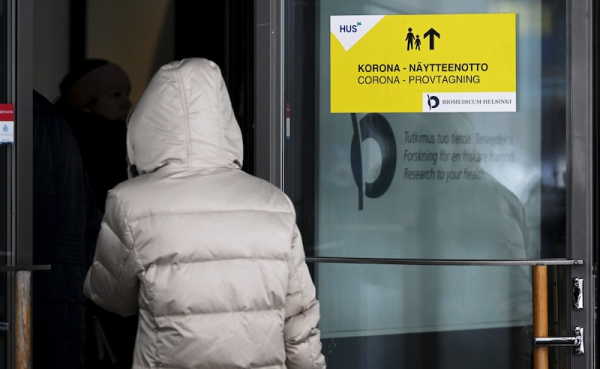


A sign at the Biomedicum’s door in Meilahti, Helsinki, indicating HUS’s coronavirus tests on January 3, 2024. LEHTIKUVA
- Previous Article 2023: A tough year for Finnish real estate, with a positive turn at year’s end
- Next Article Finnish employment stays strong despite rising unemployment
The Finnish Register of Occupational Diseases has recently published its data for the years 2019 and 2020, revealing a notable shift in the trend of occupational diseases due to the COVID-19 pandemic. After years of a consistent downward trend, 2020 saw an increase in the number of recognized cases.
In 2019, 1,067 cases of occupational diseases were recognized, with 710 of these cases occurring in the working-age population.
The year 2020, however, witnessed a similar total of 1,067 recognized cases, but a higher number within the working-age group at 792 cases. Notably, over a quarter of these cases were diagnosed in individuals over the age of 65.
The escalation in 2020 is primarily attributed to the COVID-19 pandemic. Of the recognized occupational diseases, 115 cases were directly linked to COVID-19, predominantly in the health and social services sector. According to Chief Physician Kirsi Koskela, women constituted around 90% of these COVID-19 occupational disease cases, almost exclusively in health and social welfare roles.
Another significant contributor to this rise is the increase in cases of cryptosporidiosis, commonly referred to as calf diarrhea. This infectious disease saw a marked rise from 2018, suggesting the onset of an epidemic. In 2019 and 2020, there were 47 and 54 recognized cases, respectively, in the working-age population. However, only about 10% of the national cryptosporidiosis cases were acknowledged as occupational diseases, primarily in the agricultural sector.
The data also highlights persistent gender differences in the types of occupational diseases. Despite an increased proportion of women with recognized cases due to COVID-19, men still accounted for 58% of all occupational disease cases among the working-age population in 2020. The most common occupational diseases for working-age men were noise-induced hearing loss and allergic contact dermatitis, whereas for women, they were COVID-19 infection and irritant contact dermatitis.
Asbestos-related diseases, although steadily declining, continue to be diagnosed, predominantly in individuals over 65 years old. This trend is linked to the extended latency period between asbestos exposure and disease manifestation. Pleural plaques remain the most common asbestos-related disease.
In addition to the 2019-2020 data, the ‘Recognized and suspected occupational diseases 2019–2020’ publication includes revised figures for 2016–2018, following corrections to insurance company data. This latest report also introduces industry-specific tables, providing a more detailed insight into occupational disease trends across various sectors.
HT
#COVID-19
- Previous Article 2023: A tough year for Finnish real estate, with a positive turn at year’s end
- Next Article Finnish employment stays strong despite rising unemployment
Source: www.helsinkitimes.fi
