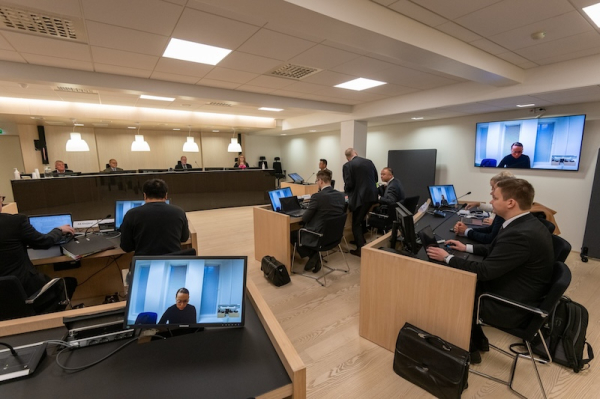


The main hearing of a human trafficking trial began at the Oulu District Court in Ylivieska on 19 November 2024. According to the prosecutor, workers recruited from China were subjected to forced labour and other degrading conditions at a quarry in Oulainen. LEHTIKUVA
- Next Article Finland’s economic struggles linked to weak private sector productivity
The number of human trafficking victims in Finland remained stable in 2024, with 207 new victims receiving assistance from the National Assistance System for Victims of Human Trafficking (NAS). Forced labour and forced marriage were the most frequently reported forms of exploitation.
The total number of new referrals to NAS was 371, marking a 27% decrease from the previous year. Of the new victims receiving assistance, 61% were women and girls.
Forced labour accounted for 45% of all human trafficking cases, making it the most common form of exploitation. Victims were often found in industries such as construction, forestry, cleaning, and the restaurant sector. Forced marriage was the second most common form, affecting 32% of victims. While its proportion has grown, the total number of cases has remained consistent. Sexual exploitation accounted for 20% of cases, a significantly lower share than in many other countries, where it typically exceeds 50%.
Among those exploited in Finland, 60% were victims of forced labour, while 23% were forced into marriage. Another 13% were subjected to sexual exploitation, and a smaller group was forced into criminal activities. Gender differences were evident: 94% of male victims in Finland were trafficked for labour, while 49% of female victims were forced into marriage.
“While the overall number of victims has returned to previous levels, the figures remain high,” said Katri Lyijynen, Deputy Director of NAS. “Men are more often victims of forced labour, whereas women are typically forced into marriage. The recent clarification of Finland’s human trafficking laws has made the criminalisation of forced marriage clearer.”
By the end of 2024, NAS had 1,610 active clients, including 1,331 identified victims and 279 of their minor children. Among the victims, 10 were minors.
HT
- Next Article Finland’s economic struggles linked to weak private sector productivity
Source: www.helsinkitimes.fi
