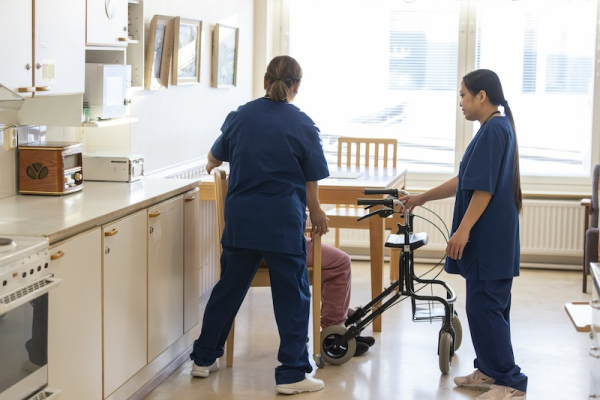


Filipino care assistants at the Toppila care home in the Kainuu wellbeing services county, Kajaani. The poor employment situation in the social and healthcare sector is reflected in foreign recruitment; only 32 arrivals in early 2025. Photo: Hannu Huttu / Str / Lehtikuva
- Next Article Finnish police officer dismissed over €3,000 bribe
Finland has recorded a steep fall in the number of foreign care professionals arriving to work in the country, with first residence permits granted to social and healthcare workers dropping 94 percent compared to the same period last year.
Between January and April 2025, only 32 positive decisions were made for first-time residence permits for workers in the social and healthcare sector. A year earlier, the number stood at 572.
The largest share of these permits this year went to citizens of the Philippines, who received 12 approvals. Fewer than ten were issued to applicants from Sri Lanka.
The drop comes amid growing financial strain across Finland’s public sector, especially in regional wellbeing services, which are responsible for organising healthcare. The Ministry of Finance has cited worsening budget conditions for these areas in recent assessments.
The current trend follows a peak in 2023, when record numbers of foreign care workers received residence permits. Since then, approvals have declined significantly, reaching levels last seen in 2018. If the current pace continues, the total number of positive decisions for 2025 is expected to remain under 100.
Filipino nationals have traditionally filled many roles in Finland’s care sector. Their declining presence reflects a broader slowdown in labour migration from the Philippines, which has been ongoing since 2024. The government report links this fall partly to financial difficulties in Finland’s public healthcare system, which affects both recruitment efforts and job availability.
Approved residence permits for care workers have become rare across all Finnish regions. Only a handful of decisions were made in major cities during the first quarter of 2025, suggesting that the shortage is not limited to rural areas.
The decline also raises questions for long-term care planning in a country facing rapid population ageing. Previous immigration trends helped address shortages in elderly care, but fewer incoming workers could increase pressure on existing staff.
Applications from Filipino nationals for all work-based residence permits fell 40 percent in early 2025, the report confirms. A significant share of these applicants typically work in healthcare roles.
Meanwhile, demand for social and healthcare workers remains high. Employers in the sector continue to face difficulties filling vacancies. According to earlier data from Statistics Finland, foreign-born workers have accounted for up to 10 percent of care home staff in some regions.
No significant rise in residence permit applications from other nationalities has compensated for the fall in Filipino applicants. Numbers from Sri Lanka, India, and Vietnam remained low, and overall work-based immigration declined 19 percent compared to the first four months of 2024.
The Finnish Immigration Service processed 1,417 first-time worker permit decisions in early 2025, with 61 percent approved. However, the care sector is seeing fewer applications than any point in the past six years.
HT
- Next Article Finnish police officer dismissed over €3,000 bribe
Source: www.helsinkitimes.fi
