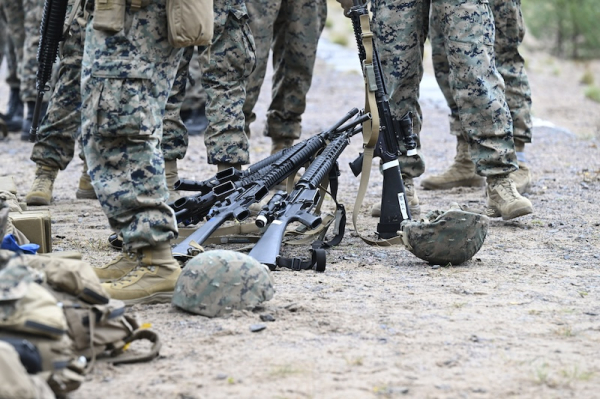


According to an EVA survey, nearly half fear a major European war. Photo: Markku Ulander / Lehtikuva
- Next Article Education at the heart of 2025 Independence Day reception
Nearly half of the Finnish population believes the war in Ukraine may escalate into a wider European conflict in the near future, a new national survey shows.
According to the autumn 2025 Values and Attitudes Survey, 46 percent of Finns fear a major war spreading across Europe. About one-third, or 31 percent, do not consider it likely, while 22 percent remain unsure.
Women were significantly more likely to express fear about escalation.
Among female respondents, 57 percent feared a large-scale war, compared to 37 percent of men. Levels of fear were also higher among those with lower educational backgrounds.
Despite widespread concern, confidence in NATO has increased after a temporary dip earlier in the year. Thirty-eight percent of respondents now view NATO’s collective defence guarantees as a credible deterrent against any attacks on its member states. This marked a six-point rise from spring 2025.
A smaller share of the population, 32 percent, expressed doubt about NATO’s deterrent capability. The remaining 30 percent were undecided.
NATO membership remains broadly supported. Two-thirds (67 percent) of Finns view the alliance positively, while only 10 percent expressed negative views. About one in five (20 percent) remained neutral.
Public trust in NATO’s security guarantees declined earlier in 2025 following the return of Donald Trump to the US presidency. Confidence has since partially recovered, but remains below the levels seen during Finland’s NATO accession period in 2022–2023.
Efforts to advance a peace deal in Ukraine have also stalled. A planned meeting in Budapest between Trump and Russian President Vladimir Putin was cancelled in late October. The US withdrew after Russia refused to soften its conditions, which included territorial concessions from Ukraine and a guarantee that the country would not join NATO.
The situation has worsened as both Russia and the United States raised nuclear threats. Russia resumed nuclear rhetoric, prompting the US to announce it would restart nuclear weapons testing. The survey results reflect growing public anxiety during this period of uncertainty.
Differences between population groups remain visible. Men (48 percent) are more likely than women (28 percent) to see NATO’s guarantees as a strong deterrent. Among party supporters, those backing the conservative National Coalition Party (65 percent) showed the highest confidence in NATO. In contrast, Left Alliance voters (26 percent) were the least trusting.
Support for NATO was highest among National Coalition (90 percent) and Green League (79 percent) voters. It was also strong among Social Democratic Party (73 percent), Centre Party (71 percent) and Finns Party (69 percent) supporters. The lowest support appeared in municipalities with fewer than 4,000 residents (43 percent) and among Left Alliance voters (44 percent).
The Finnish public continues to view national defence as the country’s primary security guarantee, even after NATO accession. Two-thirds (66 percent) of respondents said Finland must be able to defend itself under all circumstances. Only 19 percent rejected this view.
Support for self-reliant defence was lower among Green League (51 percent) and Left Alliance (49 percent) voters. This contrast is notable given that these same groups also express lower trust in NATO’s deterrent.
Among respondents, 53 percent doubted whether NATO membership would result in practical help from other countries during a crisis. Only 28 percent believed member states would reliably support Finland in such a case.
This scepticism was most common among Finns Party (64 percent) and Left Alliance (59 percent) voters. Both groups have historically shown more critical views of NATO. While Finns Party supporters have become somewhat more favourable toward NATO under Trump’s presidency, doubts about international solidarity persist.
Despite varying levels of trust in NATO, support for European Union defence cooperation remains broad. The Values and Attitudes Survey suggests that many Finns, including those sceptical of NATO, view EU security collaboration as a valuable complement to the alliance.
HT
- Next Article Education at the heart of 2025 Independence Day reception
Source: www.helsinkitimes.fi
