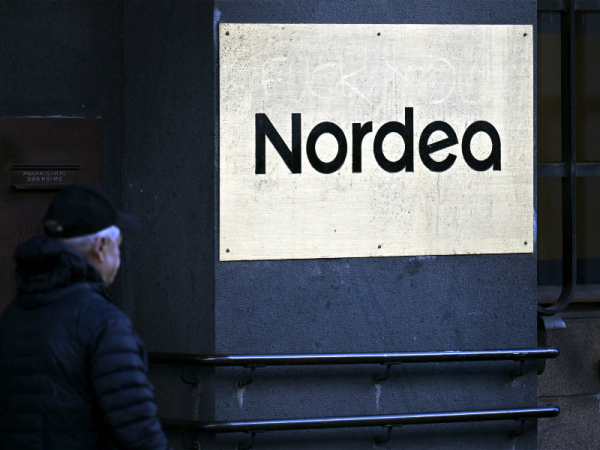


A Nordea office on Aleksanterinkatu in Helsinki in March 2023. The Nordic financial group has revised down its economic forecast for Finland in 2025, citing the effects of the fiscal adjustment measures announced by the government. (Markku Ulander – Lehtikuva)
- Next Article Helsinki celebrates May Day with unique traditions and public events
ECONOMISTS at Nordea are of the view that the fiscal adjustment measures unveiled last week dim the outlook for economic growth in Finland.
Nordea on Wednesday stated in its latest economic forecast that it expects the country’s gross domestic product to grow by 1.5 per cent in 2025, representing a half-a-percentage-point reduction from the forecast it published in January.
Its economists said they scaled back their expectations because the adjustment measures will hamstring the recovery of purchasing power.
“Increases in the value-added tax will add to inflation and hold back the recovery of purchasing power. The much-anticipated reduction in interest rates will compensate partly for the impact the adjustments will have on domestic consumption,” remarked Juho Kostiainen, an economist at Nordea.
The measures are necessary to put a stop to the accumulation of central government debt in spite of their negative impact on economic growth, according to the financial services provider.
The Finnish government last week reached an agreement on additional spending cuts and tax increases worth around three billion euros in order to narrow the budget deficit and reverse the debt trajectory. Nordea argued that the measures will help to balance the public economy, estimating the debt-to-output ratio should to stop growing next year as a consequence of the measures and accelerating economic growth.
The national economy is forecast to contract by one per cent in 2024. It is forecast to return to a growth path at the end of this year as a result of slowing inflation, the improving purchasing power of household and the interest rate cuts of central banks.
The gross domestic product contracted by one per cent also in 2023, according to recent data from Statistics Finland. The contraction has attributed to the fact that rising reference rates for housing loans undermined purchasing power and slowed down residential construction.
The Finnish economy was thereby one of the worst performing economies in the EU.
Nordea on Wednesday predicted that the house market will continue to adjust to rising supply and higher interest rates, ensuring construction, prices and sales will remain relatively muted also in 2025. Private consumption, however, is forecast to increase this year as inflation slows down and global growth creates more demand for exports.
“Slowing inflation and decreasing interest rates, together with rising demand for exports, are about to return the economy to a growth trajectory during the course of this year. Sluggish construction will make sure the full-year growth figure will be negative,” said Kostiainen.
The recovery of private consumption will gain further pace next year, providing relief to the retail and service sectors. The increase in real incomes will likely also contribute to the strengthening of consumer confidence.
Aleksi Teivainen – HT
- Next Article Helsinki celebrates May Day with unique traditions and public events
Source: www.helsinkitimes.fi
