

Photo: Roni Rekomaa / Lehtikuva
- Next Article Thousands queue through the night for soft serve at Oulu beach
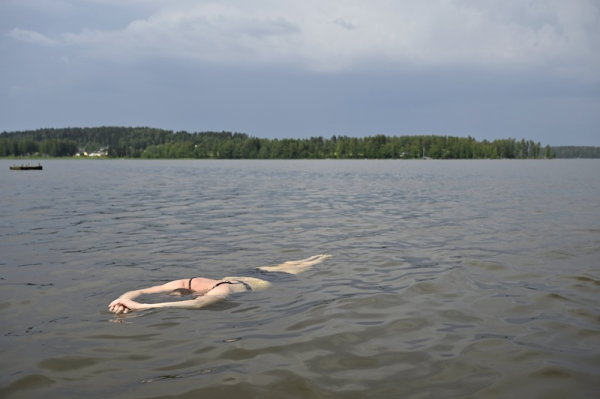
Several Finnish lakes have reached surface temperatures above 25°C this week, offering rare summer conditions for swimmers but creating problems for cold-water fish and lake ecosystems.
Näsijärvi in Ylöjärvi recorded a surface water temperature of 25.2°C on Tuesday, 5.6°C above the long-term July average. In Nurmes, Lake Pielinen’s surface temperature was 6.5°C higher than normal for this time of year.
According to the Finnish Environment Institute (Syke), most lakes across Finland are now significantly warmer than usual for late July. Daily measurements show the warmest readings this morning came from Pielavesi at 25.7°C, along with high temperatures at Lappajärvi and Pielinen.
Despite the heat, the recent upward trend appears to be levelling off. “So far it looks like the temperature rise is stabilising,” said Sami Soosalu, a hydrologist at Syke. “That means new records are unlikely for now, but continued heat could change that.”
The warmth has drawn holidaymakers to beaches across the country. However, scientists warn that prolonged surface heating threatens underwater ecosystems by strengthening stratification, the layering of warm surface water and colder bottom water.
“This prevents mixing of oxygen-rich surface water and deeper layers,” said Satu Maaria Karjalainen, a senior researcher and group leader at Syke. “Oxygen levels near the lakebed may drop, especially if there is a high nutrient load.”
Karjalainen explained that stratified conditions may also increase internal nutrient release from sediments, fuelling algae growth. Some cyanobacteria species thrive in warm, nutrient-rich environments, raising the risk of harmful blooms.
For cold-water species such as trout and other salmonids, the impact is more direct. “These fish need cold and oxygen-rich water. During heatwaves, they may struggle to find suitable habitat,” Karjalainen said.
The strain on aquatic life has already led to policy changes. Metsähallitus, Finland’s state-owned forest and land manager, announced this week it would suspend fishing permit sales at several salmon streams due to rising water temperatures.
Karjalainen said these challenges are likely to intensify with climate change. Warmer summers and shorter winters could permanently shift lake conditions in Finland, forcing freshwater species to adapt, or disappear.
“Biodiversity in our inland waters is under threat,” she said. “We are seeing the early stages of long-term change.”
Measurements are part of Finland’s national environmental monitoring programme. The five warmest lakes on Tuesday, in addition to Näsijärvi and Pielinen, were Pyhäjärvi in Säkylä, Längelmävesi, and Päijänne.
Daily temperature data is updated on the Finnish environmental administration’s joint web platform, where trends are closely watched by researchers and authorities.
The warm waters have brought mixed reactions. Families enjoying the lakeside conditions said the warmest swimming in years has transformed their summer experience. But for those working in environmental protection, the figures raise concern.
“The consequences may not be visible to swimmers, but underwater, the stress on species is real,” Karjalainen said.
HT
- Next Article Thousands queue through the night for soft serve at Oulu beach
Source: www.helsinkitimes.fi
