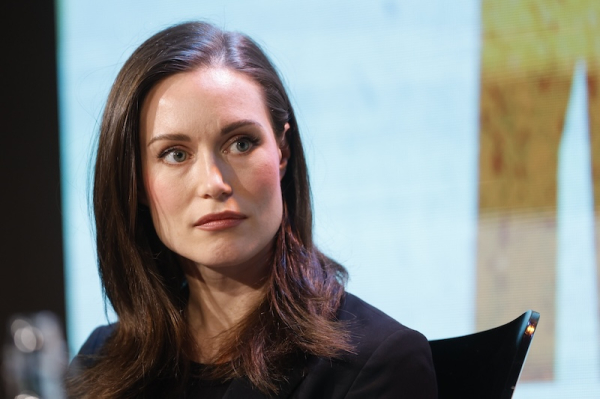


File photo of former Prime Minister Sanna Marin. Photo: Roni Rekomaa / Lehtikuva
- Next Article Xi and Stubb mark 75 years of China–Finland ties
Sanna Marin has published a detailed personal account of her time in office as Finland’s prime minister, revealing health breakdowns, political tensions, and the fallout from media scandals. In Toivo on tekoja (Hope in Action), Marin offers her perspective on the challenges of leadership during a turbulent term shaped by the pandemic, war in Europe, and domestic political unrest.
Marin writes about reaching a physical and mental breaking point during the early stages of the coronavirus crisis. She describes losing her vision temporarily due to stress and experiencing stomach issues, fatigue, and weight loss.
“I couldn’t read text or recognise faces,” she recalls. “Nothing had time to absorb. I began to lose weight.” She reports intense back pain and emotional strain but felt compelled to maintain control. “I felt I had a task – like I was in the eye of the storm.”
The memoir covers the long hours and unrelenting pressure of government work in 2020. Marin says she only took a few hours off during the first weeks of the crisis. Even then, she returned to find her desk piled high. “It was a year’s worth of work waiting for me.”
Marin speaks candidly about her marriage breakdown with Markus Räikkönen, her partner of nearly two decades. She says the emotional bond that had existed since their teenage years slowly wore down due to the demands of her job. “We lived under the same roof but barely stopped to look at each other,” she writes. “I closed myself off.” She describes the moment she realised the marriage was over as clear but not dramatic. “There was no betrayal. Just an understanding that something irreversible had happened.”
Public scrutiny intensified during her premiership, particularly in 2022 when videos leaked showing Marin dancing and singing at a private gathering. The footage, initially circulated on a private Instagram account, was later published by media. Marin describes watching the videos spread while trapped inside her official vehicle with senior aides and party colleagues, metres away from unaware reporters.
“We sat silently in the car watching journalists on the phone. We knew we couldn’t step out without being photographed in what would look like a crisis meeting,” Marin writes. She says the scene was surreal and compared it to a film.
Soon after the videos appeared, Marin faced drug use allegations. Opposition figures suggested she take a test. Marin agreed reluctantly. “I hadn’t used drugs and I wanted to settle the matter.” She asked for all possible substances to be tested, then began to worry about poppy seeds. “What if my breakfast had caused a false positive, like in Seinfeld?” she writes.
The results were negative. A moment of panic followed when her aides realised ecstasy wasn’t explicitly listed in the test report. Marin says they both searched online to confirm its classification. “If it had been missing, I’d have had no option but to resign.” A call to the doctor confirmed that MDMA was included in the test under amphetamines.
More controversy followed when a photo emerged showing two women kissing in the official prime minister’s residence during a party. One of them had covered her chest with a “Finland” sign. Marin apologised, saying the setting made the image inappropriate. Her aides, she says, were deeply worried about the damage. She addressed the public directly at a party event in Lahti, where she became visibly emotional. “Even I need joy and light sometimes,” she said.
Marin also reflects on the media response to her conduct, calling the scrutiny sexist and moralising. “Matters that would barely raise headlines for others turned into weeks-long storms,” she writes.
The memoir addresses Finland’s path to NATO membership. Marin’s tone on the issue is measured. She acknowledges that her position shifted toward support for membership even before Russia’s full-scale invasion of Ukraine in 2022. She credits a 2021 European Council meeting for changing her perspective. “Russia had become more hostile,” she writes.
Marin explains how the Social Democratic Party planned to neutralise its opposition to NATO before eventually supporting accession. “I thought it would take five to ten years.” Events moved faster. Marin recalls key moments during spring 2022 and her coordination with other party leaders. She describes Annika Saarikko, leader of the Centre Party, as understanding of the need for change, even if discussions were not easy.
Marin says she was surprised by President Sauli Niinistö’s initial response to the developing NATO debate. She writes that she contacted him to discuss upcoming developments and was taken aback when he said the issue belonged to Parliament. “I was left speechless,” she says, adding that the division of foreign policy responsibility was more complex.
Niinistö receives only brief mention in Marin’s book. In contrast, he referred to Marin nearly 20 times in his own recently published memoir. Marin’s account omits any comment on their reportedly tense relationship.
She writes in more detail about intra-government disputes, particularly with the Centre Party. Marin recalls a budget negotiation in 2022 that nearly collapsed over disagreements on unemployment benefits. She walked out of the meeting and threatened to dissolve the government. “I would not accept further demands,” she writes. “I slammed the door on my way out.”
She believed the Centre Party was trying to provoke a collapse of the government without taking the blame. “I assume they hoped the National Coalition would replace them, allowing the Centre to rebuild in opposition.” Ultimately, Marin’s government completed its term.
The final chapters focus on her departure from Parliament. After receiving more than 35,000 votes in the 2023 election, Marin stepped down to accept a post as strategic adviser at the Tony Blair Institute. She explains the decision by citing the difficulties of returning to the backbenches after leading the government. “I didn’t want to overshadow the new party leadership.”
Toivo on tekoja has been released in 17 countries. The English edition, Hope in Action, includes background material on Finland’s political system for international readers.
Marin does not comment in the book on whether she will return to politics.
HT
- Next Article Xi and Stubb mark 75 years of China–Finland ties
Source: www.helsinkitimes.fi
