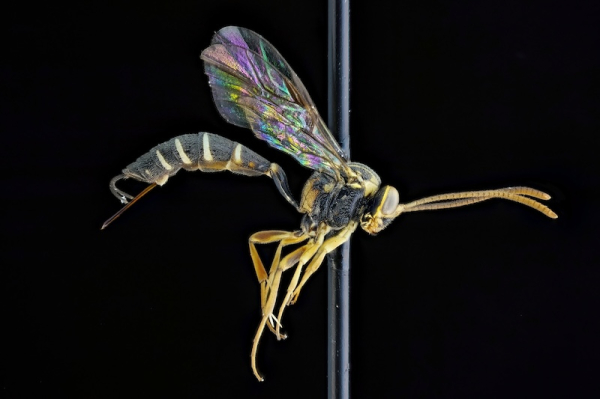


Insect researchers from the University of Turku’s Biodiversity Unit discovered a previously unknown wasp subfamily in Finland, found in the Skanssi biodiversity park in Turku. Photo: Kari Kaunisto / Turku University
- Previous Article Drunk e-scooter riders fined under new Finnish law
- Next Article Rare dolphin sightings reported in Gulf of Finland
A wasp from a little-known tropical subfamily has been discovered for the first time in Finland, in an urban biodiversity park in Turku.
The species, Brachycyrtus ornatus, was identified by insect researchers from the University of Turku’s Biodiversity Unit during fieldwork in the Skanssi biodiversity park. The brightly coloured parasite wasp belongs to the Brachycyrtinae subfamily of ichneumon wasps, most of which are known from tropical regions.
“This kind of find is rare in Finland,” said Professor Ilari E. Sääksjärvi, noting that while Finland’s ichneumon fauna is well documented, new data continue to emerge.
According to the university, members of the Brachycyrtinae subfamily are parasites that develop inside the cocoons of lacewings. The biology of these wasps remains poorly understood, and the subfamily does not yet have a Finnish name.
The specimen found in Skanssi matches one reported in Sweden 14 years ago. Researchers had anticipated that it would eventually be found in Finland, though its presence still marks a rare observation in the region.
The Skanssi biodiversity park is the only one of its kind in Europe. Unlike traditional conservation areas, the park is actively managed to increase biodiversity. Located within an urban environment, it gives scientists access to habitats where rare or previously unrecorded species may live.
“Our new study shows that even urban nature hosts rare, endangered, or previously undocumented species,” said Emil M. Österman, a doctoral researcher involved in the discovery. “These species often appear during comprehensive biodiversity research.”
The university’s Biodiversity Unit regularly discovers and names dozens of species each year from around the world. In addition to international work, researchers are actively mapping the species diversity of southern Finland.
In recent years, a steady flow of southern insect species has been recorded in Finland, many of them arriving due to warming temperatures. Researchers say this trend is likely to continue.
Brachycyrtus ornatus is a striking black-and-yellow insect, but its ecological role is far from decorative. Like other ichneumon wasps, it lays its eggs inside other insects. As the larvae develop, they consume the host from within.
The discovery in Turku supports evidence that overlooked or rare species can be found in man-made green areas with targeted research.
HT
- Previous Article Drunk e-scooter riders fined under new Finnish law
- Next Article Rare dolphin sightings reported in Gulf of Finland
Source: www.helsinkitimes.fi
